
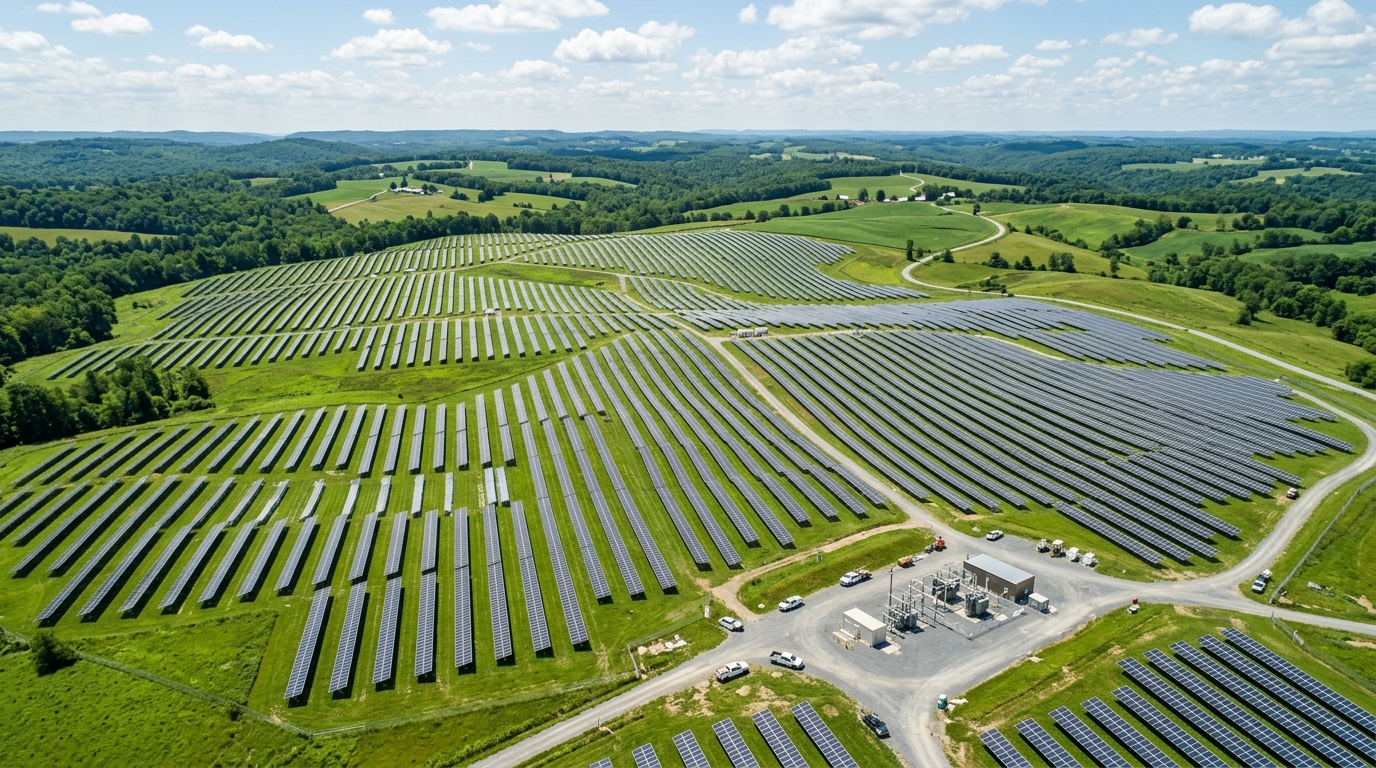
When high-consumption industries, utility providers, or agricultural enterprises need megawatts of clean power that exceed available rooftop area, ground mount solar projects provide the ideal scalable solution.
1. Optimal Module Tilt and Solar Tracking
Unlike rooftop installations that are constrained by building geometry and pitch, ground mounted systems can be positioned at the ideal solar azimuth and tilt angles. Furthermore, single-axis solar tracking systems can be deployed to follow the sun from east to west, boosting overall daily energy generation by up to 20% to 25%.
2. Ease of Maintenance and Cleaning
Accessibility is a major operational advantage of ground-mounted solar farms. Module maintenance, dust removal, semi-automated cleaning robots, and electrical inspections can be performed at ground level without the safety hazards and structural constraints associated with rooftop heights.
3. Utilizing Underutilized Land Parcels
Barren, rocky, or non-agricultural land can be transformed into productive, revenue-generating clean energy assets. Industrial developers can satisfy their captive power needs or wheel green energy across state or national grids via open access mechanisms.
4. Enhanced Cooling and Panel Efficiency
Ground-mounted arrays benefit from natural bottom airflow beneath the modules. Cooler module operating temperatures mitigate thermal degradation losses, ensuring that solar cells operate closer to their peak rated efficiency coefficients.
Conclusion
For organizations with land resources and substantial power loads, ground-mount solar infrastructure delivers unmatched economies of scale, superior reliability, and outstanding project returns. ONAS Solar specializes in end-to-end turnkey ground-mount engineering and EPC delivery.